

Public commenting is an important opportunity to make your powerful voice heard.
Let the S.F. Board of Education and SFUSD Leadership know how parents and caregivers feel, how the district can do better for our city’s kids, our teachers, and our schools!
Learn more about how to attend a meeting or make a public comment here.
Please note that as SF Parents is focused on our core issues, we only do
the summary/takes on the most pertinent agenda items related to our advocacy campaigns.
If you see that something on the BOE agenda is omitted, it is likely for this reason.
11/10/2026 Study Session at 6:30pm:
- Full meeting agenda on BoardDocs here.
- Zoom link here – Password: 208750.
- Agenda summary from SF Parent Coalition follows below.
SF PARENT’S SUMMARY:
This is the Board of Education’s fourth study session for its proposed school reorganization. The purpose of this meeting is for the Board to provide input on priorities and tradeoffs for special education, language, and transitional kindergarten (TK) programs under the new neighborhood-based system for assigning elementary school students
Item C.1 School Reorganization #4 (presentation link here; SFUSD frequently asked questions webpage link here)
On October 13, 2026, the Board of Education voted to adopt a new neighborhood-based elementary school assignment system. Under the new system, most general education students will be assigned based on where they live, while families will still have access to a lottery for citywide schools and language programs. Special education placements follow a separate process based on student needs.
At tonight’s study session, the Board will discuss how language programs, special education classes (special day classes, or SDCs), and transitional kindergarten (TK) should be organized under the new system. Many of these details have not yet been decided.
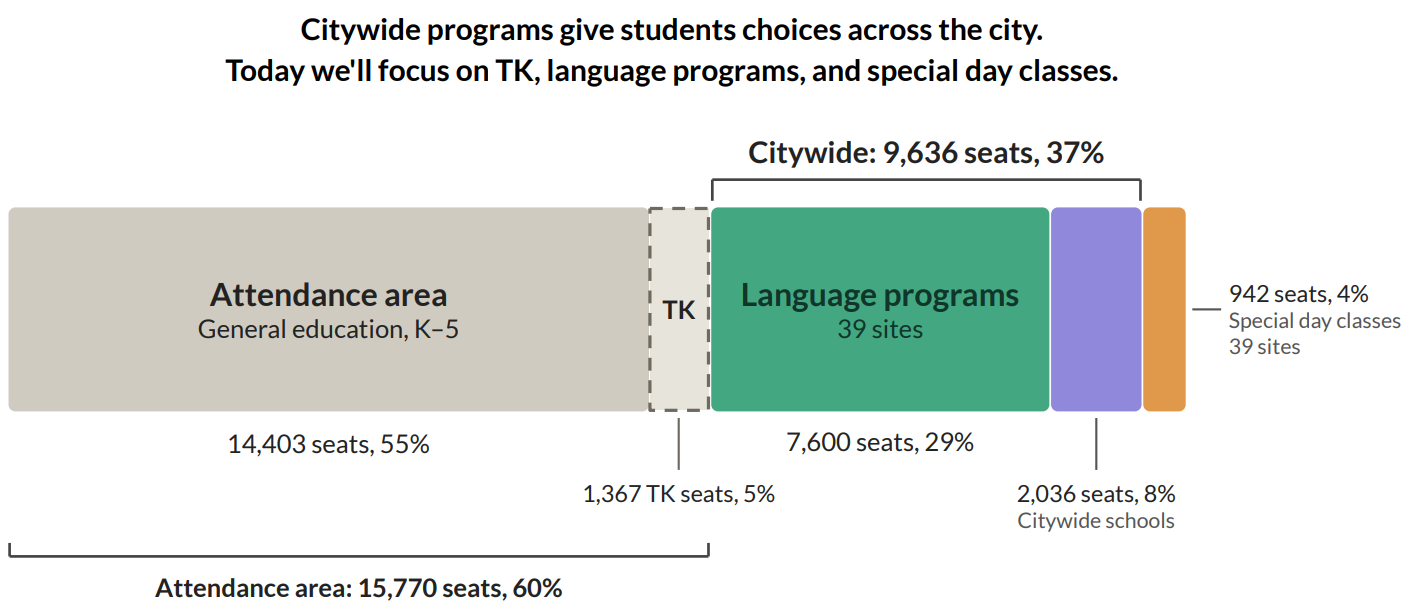
The chart below shows how elementary school seats are currently distributed across general education, TK, language programs, citywide schools, and special education. It provides context for tonight’s discussion, but does not represent the final design of the new system.
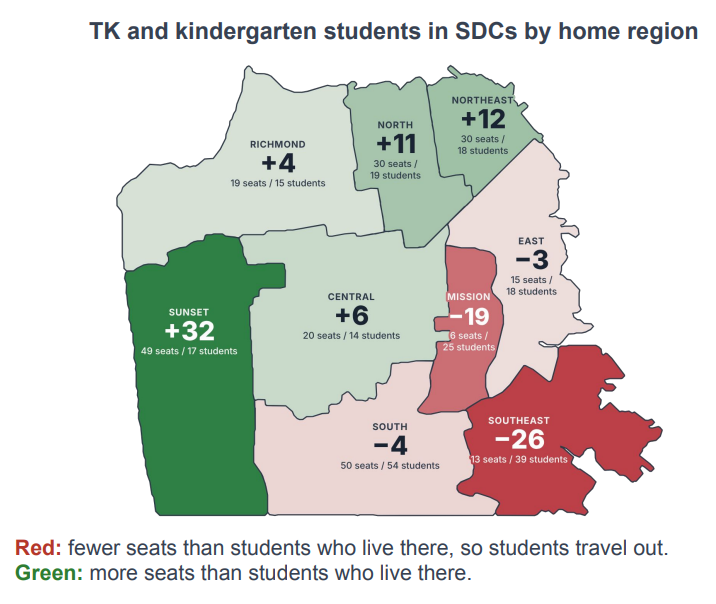
SFUSD’s data shows that special day class seats for TK and kindergarten students are not evenly distributed across the city. The greatest shortages are in the Southeast (26 fewer seats than students), Mission (19 fewer), and South (4 fewer). Meanwhile, other areas, particularly the Sunset, have more seats than students who live there.
This means some students with disabilities must travel outside their neighborhoods to access the services they need. SFUSD is considering how to better align programs with where students live.
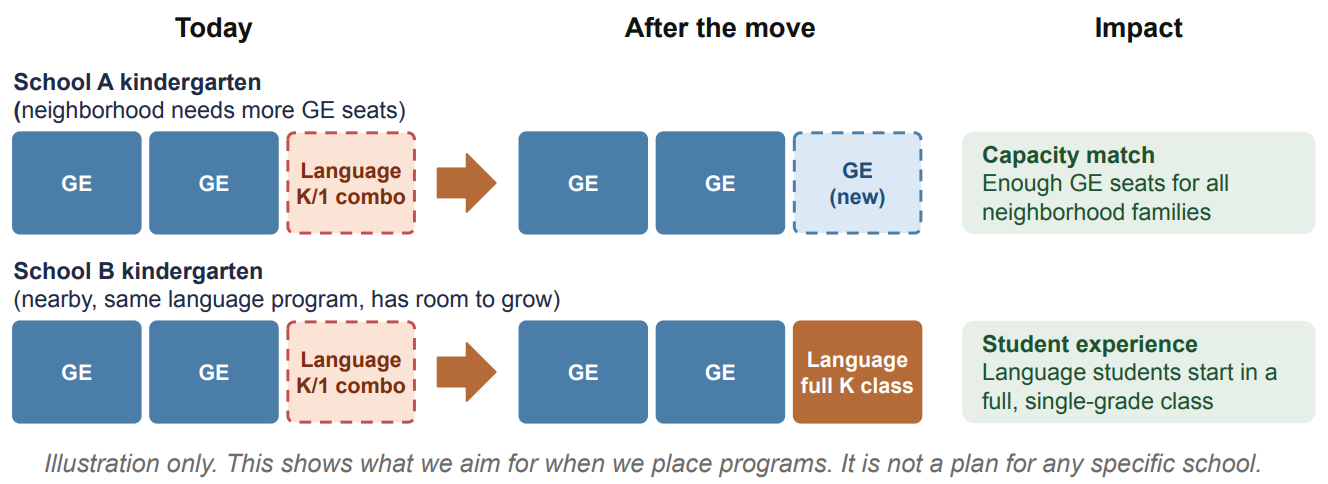
For language program alignment, SFUSD’s goal will be to have “fully staffed, fully enrolled” language programs across every grade. This means that a language program with a combination class or is under-enrolled may be changed to a regular general education/English speaking program to match capacity, as illustrated below:
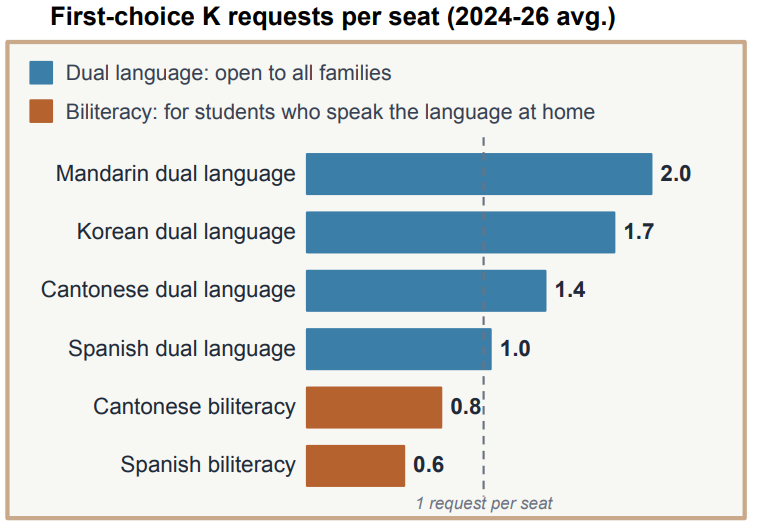
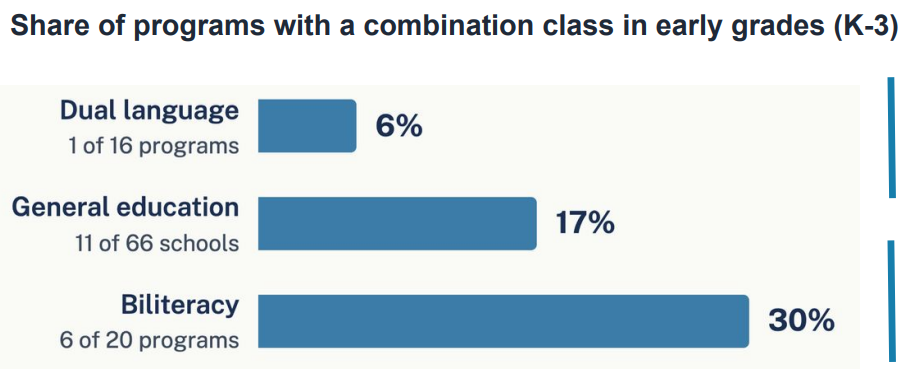
SFUSD’s presentation suggests that Cantonese and Spanish biliteracy programs are less requested and are therefore under-enrolled and have combination classes, as shown in the charts below:
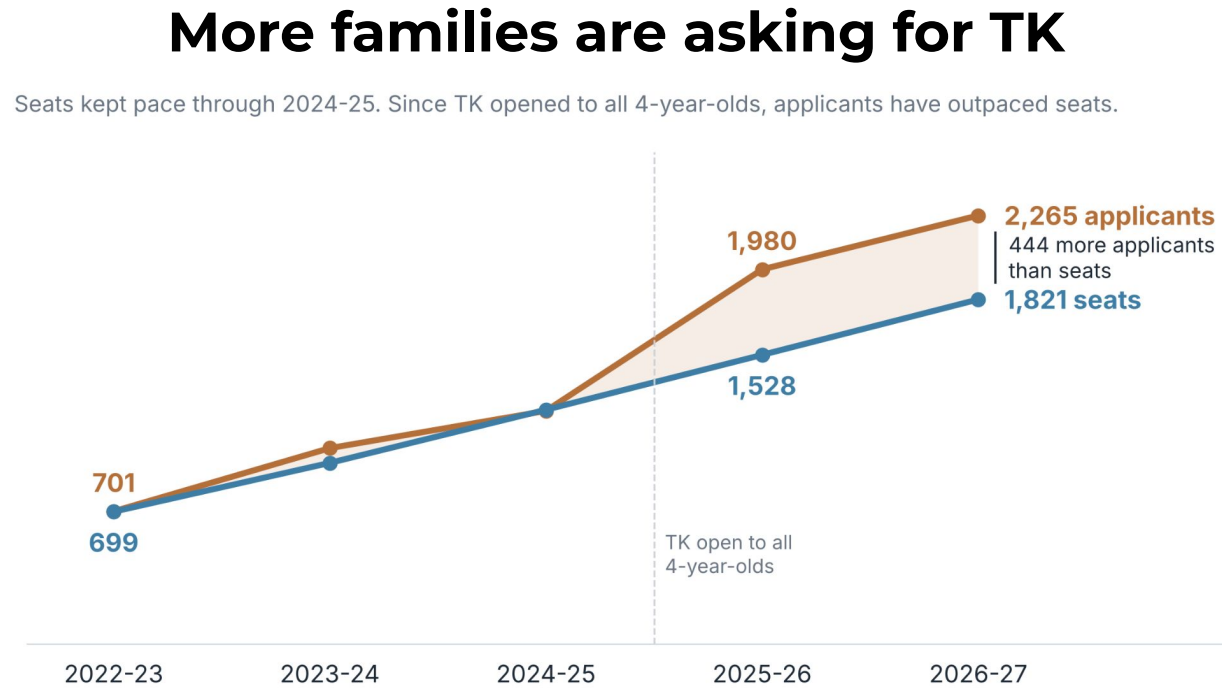
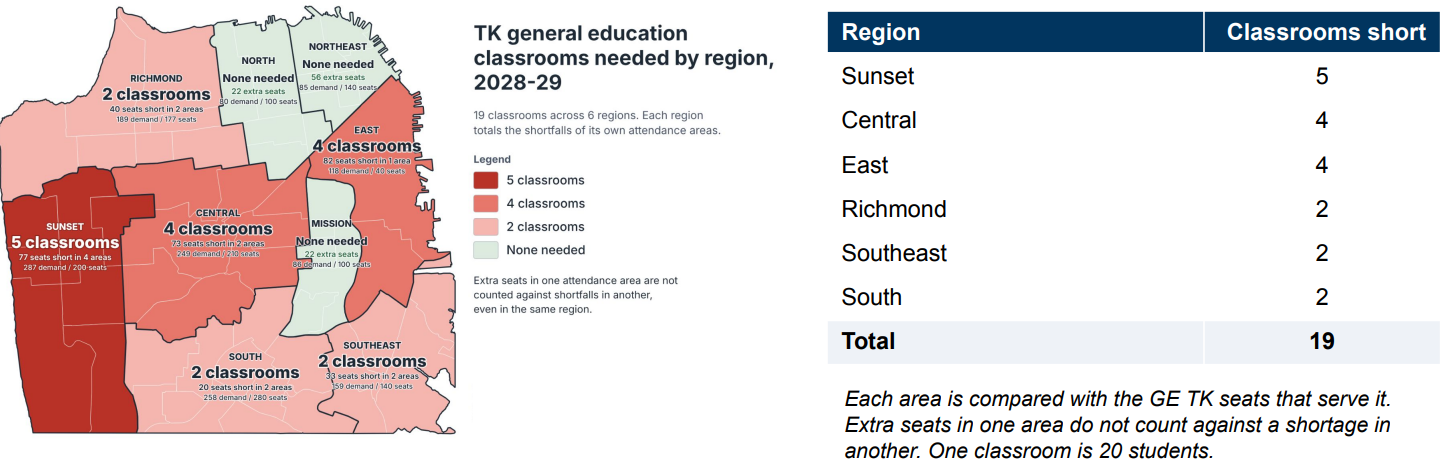
For TK program alignment, SFUSD reports that there are more applicants than TK seats available, so the district needs to add at least 19 classrooms.
Our Take
The Board has made its decision about the new enrollment system. Now, both the Board and SFUSD leadership must take responsibility for making sure implementation is thoughtful, transparent, and puts students first.
We’re particularly concerned that SFUSD does not plan to release an implementation roadmap until April 2027, when the Board is expected to take its final vote. Families cannot meaningfully participate in decisions if they don’t know what’s being decided, when, or by whom.
SF Parents is calling for two immediate commitments:
- Meaningful parent engagement: The Board and district must actively engage families throughout implementation planning, particularly those most impacted by the changes. Commissioners and district leaders need to show up, listen directly to families, and demonstrate how their input shapes decisions.
- Clear milestones and accountability: SFUSD must share a public implementation roadmap now, with timelines, key decisions, responsible leaders, and opportunities for parent input. The Board must provide active oversight and hold district leadership accountable for progress.
Tonight’s discussion also highlights why careful planning and analysis matter. Expanding special education programs requires adequate staffing and resources. Changes to language programs should be informed by student outcomes, including how English learners perform in biliteracy versus dual-language immersion programs, broken down by language pathway. And TK expansion must be planned without undermining existing early childhood programs.
We also expect SFUSD to provide a thorough analysis of how the new system could affect school enrollment, concentrations of poverty, students with disabilities, English learners, and historically underserved communities. The district must demonstrate that its plans will not deepen existing inequities.
Ultimately, changing how students are assigned to schools is not the same as making schools better. The Board and district must remain focused on improving student learning and ensuring every SFUSD school provides a strong education.
As a reminder – SF Parents’ community continues to demand from SFUSD:
AN INCREASED, DEMONSTRATED FOCUS ON STUDENTS: We want to see the district’s clear plan and commitment to a baseline of excellence and equity across every SFUSD school. Without clarity, analysis, and follow-through on how decisions impact student outcomes, it’s impossible to know if SFUSD is truly prioritizing what matters most—student learning and success. Through our SF Kids Can’t Wait campaign, families continue to call for urgent improvements in literacy and math outcomes for SFUSD.
GREATER TRANSPARENCY AND COMMUNITY ACCESSIBILITY:
Families deserve open, honest communication about how decisions are made and how funds are spent. SFUSD must provide clear data and impact analysis for all major initiatives, including how they support student achievement. The Board should not approve budgets or plans without confidence in their accuracy or their impact on teaching and learning.
REAL ACCOUNTABILITY AND STRONG GOVERNANCE:
SFUSD must move beyond promises to consistent, measurable action. Strong governance from the Board of Education is essential to restoring trust and delivering results for students. Commissioners must remain focused on student outcomes, fiscal responsibility, and transparency, and hold district leadership accountable for following through on commitments and delivering measurable progress.